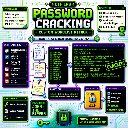

- 1Create a free account, then click "Start Lab"You'll get your own private machine with an IP address
- 2Explore the targetOpen the IP in your browser and look for vulnerabilities
- 3Find and submit flagsFlags are secret text strings hidden in the system - paste them below to score
- ~1-2 min setup
- Private instance
Windows password cracking is a critical skill in penetration testing and digital forensics. Windows operating systems store password hashes in the Security Account Manager (SAM) database, and when these hashes are extracted during a security assessment, offline cracking techniques can recover the original plaintext passwords. Understanding NTLM hash cracking helps security professionals evaluate password policies and demonstrate the risks of weak credentials in enterprise environments.
How Windows Stores Passwords
Modern Windows systems use NTLM (NT LAN Manager) hashing to store passwords. The NTLM hash is computed as the MD4 digest of the password's UTF-16LE encoding - notably, it uses no salt, meaning identical passwords always produce identical hashes across all systems. This design weakness makes NTLM hashes vulnerable to precomputed attacks like rainbow tables and highly efficient dictionary attacks. The SAM database, located at C:\Windows\System32\config\SAM, stores these hashes and is normally locked by the operating system while Windows is running.
During penetration tests, NTLM hashes can be extracted through various methods: booting from external media to access the SAM file offline, using tools like mimikatz to dump hashes from memory, leveraging DCSync attacks against domain controllers, or extracting hashes from Volume Shadow Copies. The standard dump format is username:RID:LM_hash:NTLM_hash:::, where the NTLM hash in the fourth field is the target for cracking.
Cracking NTLM Hashes with Hashcat
Two primary tools dominate the password cracking landscape. A proper hashcat tutorial covers GPU-accelerated cracking that achieves extraordinary speeds - modern GPUs can test billions of NTLM candidates per second. John the Ripper provides a versatile CPU-based alternative with intelligent wordlist mangling rules. Both tools support dictionary attacks with mutation rules, brute-force attacks against short passwords, mask attacks for known password patterns, and hybrid approaches combining wordlists with character appending.
Defending Against Password Cracking
Organizations can defend against NTLM cracking by enforcing strong password policies (minimum 12 characters, complexity requirements), implementing account lockout policies, using multi-factor authentication, and migrating to modern protocols like Kerberos with AES encryption. Regular password audits using the same cracking tools help identify weak passwords before attackers do. The fundamental lesson is that no hashing algorithm can protect a weak password from a determined attacker with modern hardware.
What You Will Learn
- Understand Windows NTLM password hashing and the SAM database structure
- Learn to identify and parse NTLM hash dump formats
- Master hashcat and John the Ripper for efficient offline password cracking
- Apply dictionary attacks and rule-based mutations to recover passwords
- Develop skills for password policy assessment in enterprise environments