

Launch your dedicated machine to begin hacking
- 1Create a free account, then click "Start Lab"You'll get your own private machine with an IP address
- 2Explore the targetOpen the IP in your browser and look for vulnerabilities
- 3Find and submit flagsFlags are secret text strings hidden in the system - paste them below to score
- ~1-2 min setup
- Private instance
- 30 min per session. Restart it for free, as often as you like.
What is an SSRF attack?
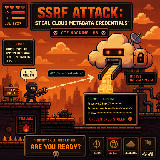
A server-side request forgery (SSRF) attack tricks a server into making HTTP requests on the attacker's behalf. When an application fetches a user-supplied URL - to build a link preview, render a thumbnail, or call a webhook - an attacker can point it at addresses the server can reach but the attacker cannot: internal admin panels, databases, and, most dangerously in the cloud, the instance metadata service. This lab is built around that exact pattern.
How this lab works
You are looking at Previewly, a link-preview SaaS that turns any URL into a rich card by fetching it server-side. That fetch has no allow-list. Working entirely from the Attack Terminal with curl and jq, you will turn the preview feature into an SSRF primitive, reach the cloud metadata service at 169.254.169.254, read a secret leaked into the instance user-data for the user flag, then steal the instance's temporary IAM role credentials. Replaying that stolen session token against Previewly's over-permissive internal control-plane gives you the root flag. Every step is hands-on; nothing is simulated away.
Why practice SSRF and cloud metadata attacks?
SSRF against the metadata service is one of the highest-impact cloud attacks there is. In the 2019 Capital One breach, an SSRF flaw let an attacker read IAM credentials from 169.254.169.254 and exfiltrate over 100 million records from S3. The fix - IMDSv2, which requires a session token and blocks the naive SSRF - is now standard, but plenty of instances still allow IMDSv1. Practicing the full chain on HackerDNA builds the instinct to spot a vulnerable URL-fetch feature, recognize the metadata endpoint, and understand why least-privilege IAM roles matter.
What You Will Learn
- Identify server-side request forgery in a URL preview feature
- Exploit SSRF to reach the cloud instance metadata service (IMDS)
- Extract a secret leaked in EC2 user-data through the metadata service
- Steal temporary IAM role credentials from the security-credentials endpoint
- Replay a stolen session token against an over-permissive internal API
- Recognize the IMDSv1 misconfiguration that enables cloud credential theft